
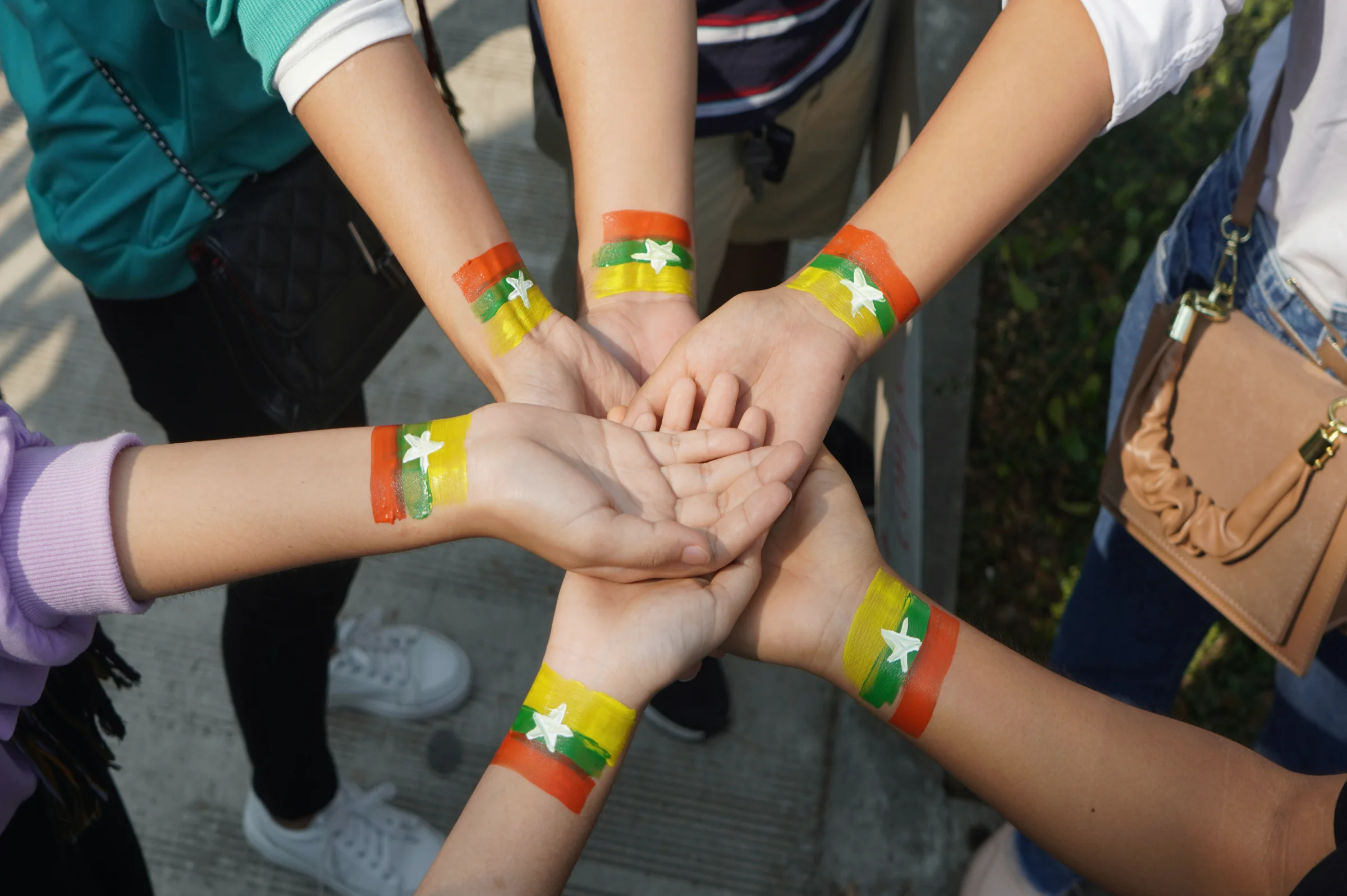
Myanmar’s political crisis has entered a prolonged and complex phase. Nearly five years after the 2021 military coup, authority across the country has become increasingly decentralized. In many areas, local administrations, ethnic governance bodies, and civic networks are operating under sustained conflict conditions while assuming growing responsibility for civilian populations.
In this environment, calls for dialogue and negotiated settlement are understandable. Yet experience — both in Myanmar and in other protracted conflicts — suggests that meaningful negotiation rarely succeeds in the absence of strong working relationships having first been built between key actors. Dialogue cannot substitute for relationships; it depends upon them.
The lesson is clear: cooperation must precede negotiation — and cooperation itself depends on trust built through sustained, practical engagement.
Fragmentation as a Structural and Relational Constraint
Myanmar’s democratic and resistance landscape is characterized by diversity. Ethnic armed organizations, political bodies, local defense forces, interim governance structures, and civic networks operate across varied territorial and political realities. This pluralism reflects the country’s federal aspirations. However, unmanaged fragmentation has become a structural constraint.
Fragmentation is not only institutional; it is relational. Years of conflict, displacement, and political betrayal have deepened mistrust among actors who need to ultimately come together and cooperate. Leaders often arrive to dialogue carrying real histories of hurt, grievance, and fear — of marginalization, of scarcity, of losing hard-won autonomy. In such conditions, technical coordination mechanisms alone are insufficient.
Personal relationships matter. Recognition of shared vulnerability — of families affected by conflict, of communities under extraordinary strain, of overlapping burdens — reintroduces humanity into political engagement. When actors understand one another not only as representatives of constituencies but as individuals navigating similar pressures, common ground becomes possible.
Institutional frameworks are essential, but they cannot substitute for human trust. Durable cooperation depends on both.
International partners are increasingly aware of this dynamic. Fragmented engagement through multiple unaligned actors increases risk and transaction costs. Where relationships remain thin and mistrust unresolved, coordination becomes brittle. Over time, international actors may scale back engagement rather than attempt to navigate unpredictable fragmentation.
The Limits of Premature Negotiation
Myanmar’s earlier peace processes, including efforts under the Nationwide Ceasefire Agreement (NCA), provide important lessons. Formal processes launched without sufficient internal cohesion often struggle to translate political dialogue into durable implementation.
Negotiation is not merely a conversation. It requires established relationships, accumulated trust, and a shared understanding of how disagreement will be managed. Without these foundations, talks become positional rather than constructive. Participants defend constituencies rather than explore shared solutions.
In highly fragmented environments, actors may enter negotiations without clarity about mandate, internal discipline, or coordination mechanisms. When pressure mounts, relationships fracture and processes stall.
In Myanmar’s current context — marked by decentralized authority and ongoing conflict — accelerating negotiations without prior relationship-building risks repeating earlier patterns. Dialogue undertaken without cooperation can deepen mistrust rather than reduce it.
Cooperation as Relationship-Building
Cooperation before negotiation does not mean delaying political transition. It means strengthening both the relational and institutional conditions necessary for transition to succeed.
Practical cooperation — on service delivery, humanitarian access, civilian protection, or local governance — creates sustained interaction among actors who might otherwise remain distant or adversarial. Through repeated engagement, personal trust can begin to take root and misunderstandings can be clarified. Shared pressures become visibly real and fear of scarcity can give way to a recognition of interdependence.
Strong relationships built through practical collaboration provide the foundation for disciplined cooperation. Disciplined cooperation, in turn, creates the institutional preparation necessary for meaningful negotiation.
The sequence matters: human connection brings trust and understanding. Trust leads to cooperation, which in turn prepares the ground for institutional engagement and successful dialogue.
Institutional architecture must reinforce these relationships, but it cannot replace them. Dialogue built without trust tends to entrench positions; dialogue built on relationships has the potential to transform them.
Importantly, this process must be Myanmar-led. Durable cooperation cannot be externally imposed or engineered from outside. It must emerge from domestic relationships, shared responsibility, and locally grounded leadership.
The Role of Institutional Frameworks
Voluntary coordination frameworks, such as the Myanmar Cooperation Treaty (MCT), are designed to formalize and protect relationships that have already begun to develop through practical engagement.
They do not replace political bodies or pre-empt future settlements. Rather, they establish shared commitments and structured processes that hold cooperation together under stress.
Such frameworks serve three interlinked functions:
- Protecting relationships by embedding communication channels and shared expectations.
- Strengthening cooperation through agreed coordination mechanisms and principles of conduct.
- Enhancing external credibility by demonstrating discipline and predictability to international partners.
Institutional frameworks cannot manufacture trust. But they can stabilize and sustain cooperation once trust has begun to form.
Bottom-Up Discipline and External Incentives
Local leaders face a practical imperative. As responsibilities expand in opposition-held areas — from governance to humanitarian coordination — expectations of discipline increase. Yet discipline imposed without trust is fragile.
Bottom-up relationship-building is therefore not peripheral; it is foundational. Cooperation grounded in personal trust reduces the perception that “there is not enough” or that one actor’s gain must come at another’s expense. It shifts incentives from competition toward shared responsibility.
International actors are signaling that deeper engagement depends on demonstrable coherence and accountability. Where fragmentation persists — and where mistrust prevents cooperation — engagement becomes riskier and more limited. Strengthening relationships is therefore not only a moral good; it is a strategic necessity.
Actors who invest in disciplined cooperation and relational trust are more likely to remain credible partners in the eyes of international stakeholders. Those who do not risk marginalization in an environment increasingly fatigued by fragmentation.
Dialogue as Outcome, Not Starting Point
In many protracted conflicts, dialogue is treated as the first step. Yet sustainable dialogue often emerges only after sustained cooperation has created sufficient relational depth and institutional alignment.
When actors have worked together in practical ways, negotiation ceases to be an abstract confrontation. It becomes an extension of existing cooperation.
In Myanmar’s case, improving dialogue readiness means:
- Strengthening leadership-level relationships
- Encouraging structured coordination
- Embedding inclusive participation in institutional processes
- Aligning political and administrative efforts
- Building discipline before formal talks
These steps may appear incremental, but they reshape incentives and reduce the risk of collapse when negotiations eventually occur.
A Transitional Moment
Myanmar is navigating a transitional period defined by uncertainty. The pathway to peace and federal democratic governance will not be linear. However, one lesson is increasingly evident: durable transition requires relational foundations as well as institutional architecture.
Cooperation before negotiation is not a delay tactic. It is recognition that sustainable peace depends on strong relationships, disciplined cooperation, and accountable institutional preparation.
Strengthening those foundations today improves the likelihood that future dialogue — when political space allows — can be meaningful, durable, and inclusive.